How SELAH Works
A structured operating framework for consistent reporting, traceable decisions, and reliable oversight — without relying on spreadsheets.
Capture
Structured forms replace ad-hoc spreadsheets.
Validate
Controlled fields prevent inconsistent entries.
Track
Every record is owned, timestamped, and auditable.
Overview
Management sees reliable, real-time information.
This structured pattern applies across every SELAH module.
After Sign-Up: What Happens Next
Set Your Operational Structure
- • Define vessels, clients, projects
- • Clean master records
- • Controlled dropdowns
Run Daily Operations
- • Standardized reporting
- • Certificate lifecycle
- • Structured approvals
Gain Control & Visibility
- • Dashboards and exports
- • Audit trails
- • Faster oversight decisions
Example Workflows
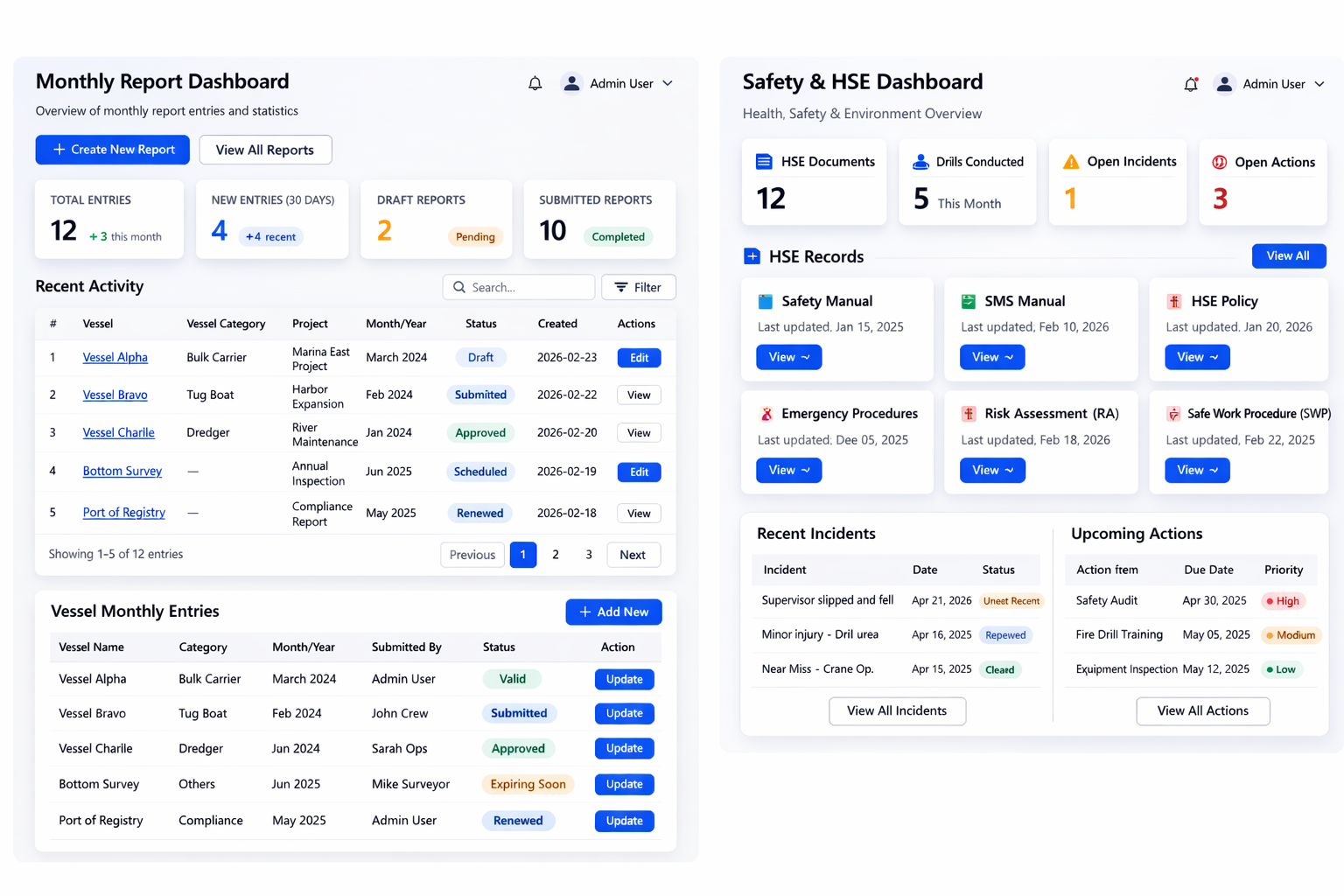
Monthly Reporting — Structured and Traceable
- Standard fields
- Ownership tracking
- Clean summary export
Certificate Lifecycle — Claim to Invoice
- Status control
- Timestamped progression
- Clear responsibility
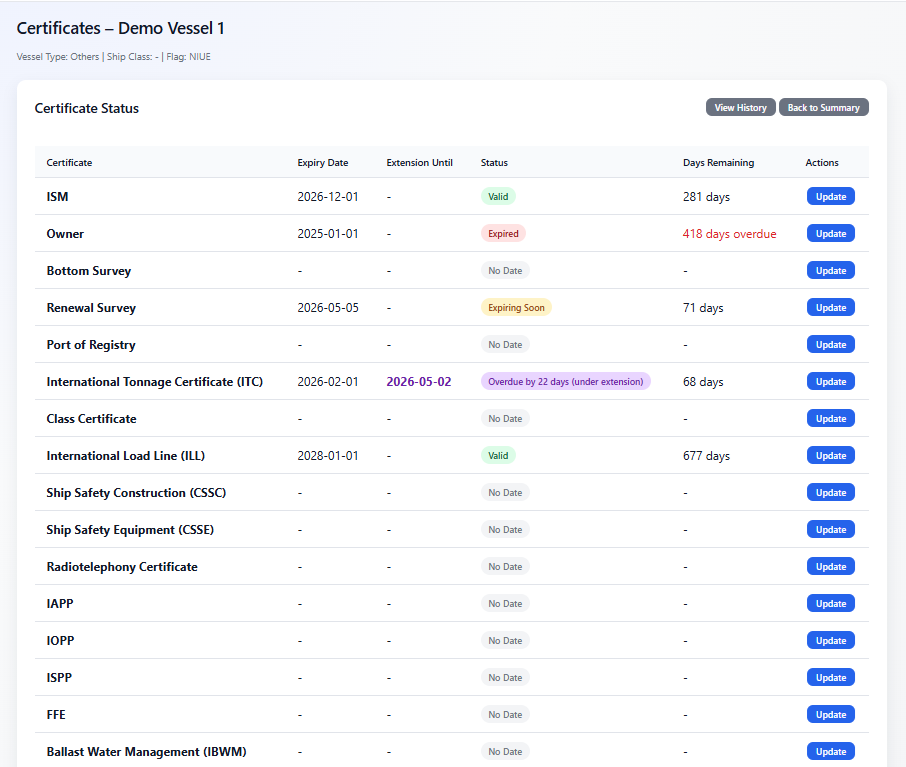
Illustrations represent standard SELAH workflows. Final interface may vary based on enabled modules and operational configuration.
Built-In Governance
SELAH is designed as operational infrastructure — ensuring structured input, traceable records, and consistent reporting across teams.
-
Standardized fields across modules
-
Ownership + timestamps on records
-
Reduced inconsistency through controlled inputs
-
Clear oversight for management
See SELAH with your operational workflow.
Review how structured reporting improves control, visibility, and accountability.